
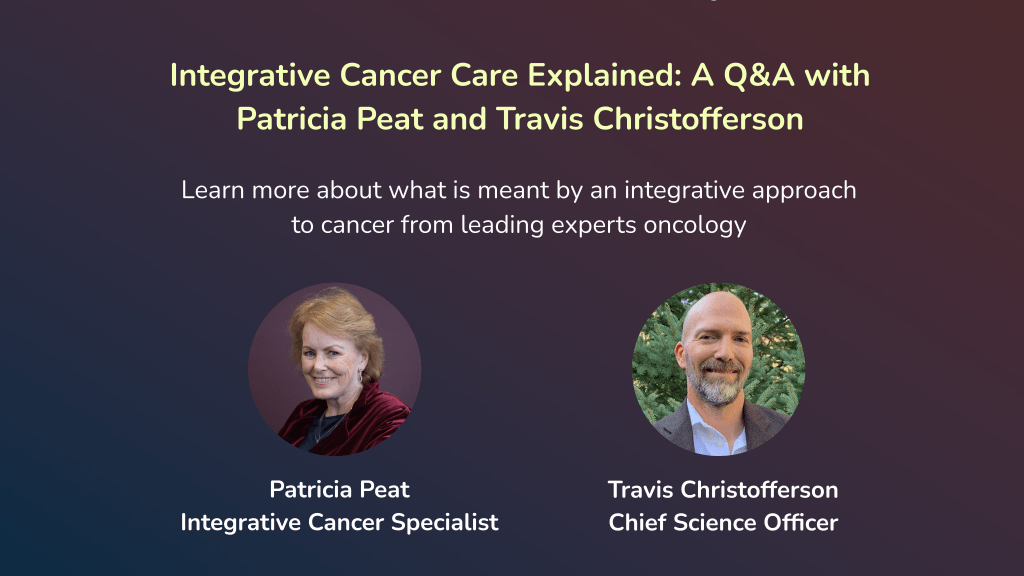
How assessment-driven, patient-centered strategies can work with standard treatments to improve tolerance, confidence, and outcomes.
Executive Summary
- Integrative ≠ alternative. The session made a clear case for complementary, assessment-based care that supports standard oncology—improving readiness for treatment, reducing toxicities, and helping patients stay on protocol.
- Personalization starts with terrain. Rather than “one right protocol,” the team advocated a test, assess, don’t guess approach: map inflammation, metabolism, gut/oral health, immune readiness, and psychosocial context—then choose a small set of high-leverage actions.
- Prepare the body, then treat. Pre-treatment conditioning—fasting/ketosis, gut optimization, targeted repurposed drugs, hyperthermia, oxygen-based therapies—can sensitize tumors and buffer side effects when timed correctly.
- Mindset is medicine. Language, agency, and social support are not afterthoughts; they shape adherence, stress biology, and quality of life. Stability on scans is often a win, and holding the line can prevent over-treating into resistance.
- Collaboration > confrontation. Best results came when integrative practitioners and oncologists worked together, with transparent rationale, safety monitoring, and willingness to adapt.
Meet the Panel
The conversation was enriched by perspectives from Dale’s care team and collaborators:
- Patricia Peat – founder and director of Cancer Options, with over 27 years’ experience in integrative cancer consultancy and a background in NHS oncology nursing, advising on evidence-based complementary and personalised approaches to cancer care
- Travis Christofferson – Chief Science Officer at Astron Health, author of Curable, Ketones: The Fourth Fuel, and Tripping Over the Truth, with a background in molecular biology, material science, and metabolic cancer research
 Astron Health Blog
Leave a comment